 Whatsapp
Ada yang ditanyakan?
Klik untuk chat dengan layanan pelanggan kami
 Pemasaran
● online 62882008193627
Redaksi● online 6282328979777
● online
- Teori Organisasi, edisi 4....
- Strategi Belajar Mengajar....
- Abu Nawas; Sufi dan Penyair Ulung yang Jenaka....
- Dear Future Husband....
- Perancangan Sistem Informasi dan Aplikasinya Edisi....
- Kebijakan Sektor Publik: Analisis, Implementasi da....
- Politik Luar Negeri Jepang....
- Laut dan Air dalam Al Quran....

- Diskon ❯ Semua buku didiskon mulai 10%
- Asli ❯ Kami menjual buku asli, dari penerbit. Tidak menjual buku bajakan, repro, kw atau ilegal lainnya
- Pengiriman ❯ Pengiriman ke seluruh Indonesia, pengiriman ke luar negeri sila WA kami
- Pembayaran ❯ Transfer Bank, Dompet Elektronik (Link Aja, Dana, Go Pay, OVO), QRIS
- Pengadaan ❯ Menerima pengadaan buku untuk perpustakaan
 click image to preview
activate zoom
click image to preview
activate zoom
20%

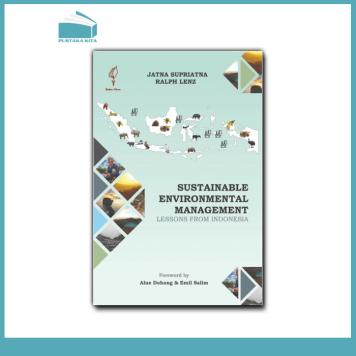
Sustainable Environmental Management: Lessons from Indonesia
Rp 232.000 Rp 290.000| ISBN | 978-623-321-168-0 |
| Stok | Tersedia |
| Kategori | Sosial |

Sustainable Environmental Management: Lessons from Indonesia
Penulis : Jatna Supriatna, Ralph Lenz
Tebal : xxiv + 618 hlm
Ukuran : 16 x 24 cm
Penerbit : Obor Indonesia
Deskripsi :
The climate change threat at present has reached a critical stage. The development of the world today is threatened, as the whole world, including Indonesia, is facing three crisis, namely the economic crisis post COVID-19 Pandemic, energy crisis caused by the war in Ukraine, and lastly the climate crisis. Many world leaders are unaware of the severity of the threat of climate change which has now transformed into a climate crisis. The derivative of the climate crisis will not only contribute to worsening of the economic crisis and energy crisis but will quickly shifted into a biodiversity catastrophe, drinking water scarcity, and the global hunger crisis. In turn, a political crisis might arose in the form of a denial of the government’s authority which was deemed unable to overcome these crises. This bleak picture requires a thorough study and solution that is effective but at the same time reaches sustainability and penetrates the future. We are blessed to read Prof. Jatna and Prof. Lenz’s Masterpiece (Magnus Opus) in the form of a book with more than 600 pages that relate to these problems and crises in a series of meanings. We should salute them for providing a clear and comprehensive picture of the interrelationships between regions, disciplines, and elements, both in terms of origin and the possibility of solving the problem. The presentation is presented comprehensively without letting go of the details and context regarding sustainability and the global picture. I am sure that many people, especially those in a strong position, can benefit and be given references from the essential things presented in this book, the great work of both authors, which I am proud of.
Prof. Rachmat Witoelar, Indonesia’s President’s Special Envoy for Climate Change (2015 -2019), and advisor to I-SER UI and CAIPSDCC)
The concept of sustainable development is a development concept that ensures the fulfillment of the human needs of the present generation without compromising the ability of future generations to meet their needs. That is, the idea of sustainable development emphasizes the development of technologies that can increase productivity and reduce the level of damage. The concept of sustainable development is an effort to integrate three aspects of life, namely social, economic, and environmental, in a synergistic relationship supported by infrastructure and institutions. This concept is in line with the avoidance of shell game theory, where shell game theory solves the problem by creating another problem. The book written by Prof. Jatna Supriatna and his colleague, Prof. Ralph Lenz, from the United States on environmentally sustainable development in Indonesia is very well written. It suits students, environmental experts, planning bureaucrats, and legislature members. Plus, those who are doing development planning both at home and abroad. Each environmental problem is described in detail and clarity, and the solution options are given so that sound environmental management can be sustainable
Prof. Satryo Brodjonegoro, President of Indonesian Academy of Sciences
Indonesia is an archipelago country that harbors natural resources. It is among the countries with the most complete and extensive natural resource base, perhaps trailing only Brazil. Still, using natural resources as input for current production processes has increased yearly depletion. With its abundant natural resources, Indonesia should have become a prosperous country from an economic perspective. But yearly rising levels of natural resource depletion in many regions of the country have occurred without an increase in equitable human welfare—those words that I picked up from Prof. Jatna Supriatna and his friend’s book. I support this book’s aim that environmental sustainability is necessary for Indonesia. This book should be read not only by students, Environment NGOs, and lecturers but also decision-makers
Dede Djuhana Ph.D, Dean of Faculty of Mathematics and Natural Sciences, Universitas Indonesia
Tags: obor indonesia, sosial
Sustainable Environmental Management: Lessons from Indonesia
| Berat | 650 gram |
| Kondisi | Baru |
| Dilihat | 929 kali |
| Diskusi | Belum ada komentar |

Penulis : David Goldblatt Tebal : 100 hlm Ukuran : 14 x 20 cm Penerbit : Ircisod Deskripsi : Ulrich Beck mengarusutamakan gagasan sosiologi risiko dalam bukunya yang berumbul Risk Society: Towards a New Modernity. Ini merupakan karya besar Beck, yang mencoba meneliti masalah sosial dan menyelesaikannya dengan akal bulus. Apabila modernitas diibaratkan sebuah kereta… selengkapnya
Rp 42.500 Rp 50.000
Penulis : Agung Purwandono Tebal : 208 hlm Ukuran : 13 x 19 cm Penerbit : Buku Mojok Deskripsi : Jogja Bawah Tanah berisi kumpulan liputan khusus tentang hal-hal yang bisa jadi belum kamu ketahui tentang Jogja.
Rp 66.300 Rp 78.000
Penulis : Virly K.A. Tebal : vi +138 hlm Ukuran : 13 x 19 cm Penerbit : EA Books Deskripsi : Buku ini adalah sebentuk keberanian untuk membicarakan sisi pernikahan yang paling banyak dihindari. Ditulis oleh seorang divorcee muda sekaligus single parent yang memutuskan bercerai di usia relatif muda, 25 tahun. Berdasarkan peristiwa hidup yang… selengkapnya
Rp 66.300 Rp 78.000
Penulis : Rianto Adi Tebal : x + 256 hlm Ukuran : 15,5 x 24 cm Penerbit : Obor Indonesia Deskripsi : Buku tentang metode penelitian sudah banyak ditulis dan diterbitkan. tetapi mengapa buku metodologi penelitian yang ini masih juga diterbitkan? Seorang teman dosen yang mengajar mata kuliah metodologi penelitian, dan menggunakan bahan ini (sewaktu… selengkapnya
Rp 76.000 Rp 95.000
Penulis : Hardiyansyah Tebal : xiv + 182 hlm Ukuran : 16 x 23 cm Penerbit : Gava Media Deskripsi : Lahirnya UU No. 25/2009 tentang Pelayanan Publik merupakan langkah dan harapan besar akan terwujudnya pelayanan publik yang berkualitas. Pelayanan yang berkualitas tentu saja pelayanan yang dapat memberikan kepuasan semua pihak, mulai dari penyelenggara pelayanan… selengkapnya
Rp 45.050 Rp 53.000
Penulis : Khudori Tebal : xx + 248 hlm Ukuran : 14,5 x 21 cm Penerbit : Obor Indonesia Deskripsi : Bulog dan beras ibarat dua sisi dari sekeping mata uang. Keduanya seolah sejoli yang tak terpisahkan. Sejak berdiri pada 1967 sampai saat ini Bulog tak pernah lepas dari tetek bengek urusan beras. Akan tetapi,… selengkapnya
Rp 76.000 Rp 95.000
Penulis : Ester Pandiangan Tebal : x +216 hlm Ukuran : 13 x 19 cm Penerbit : EA Books Deskripsi : Sebab Kita Semua Gila Seks tidak hadir sebagai bacaan serius nan ilmiah yang memaksa pembaca mengerutkan kening. Isinya pengalaman sehari-hari dari peristiwa yang enggan kita bicarakan tetapi sejatinya pernah atau akan kita kerjakan. Tak… selengkapnya
Rp 66.300 Rp 78.000

Penulis : Shofia Nur Inaya dkk. Tebal : 178 hlm Ukuran : 14,5 x 20,5 cm Penerbit : Manggu Deskripsi : Buku Fenomena sains dan sosial humaniora di era industri membahas mengenai 2 bidang yaitu; sains dan teknik, dan ilmu sosial humaniora. Sains adalah usaha-usaha sadar untuk menyelidiki, menemukan dan meningkatkan pemahaman manusia dari berbagai… selengkapnya
Rp 122.400 Rp 144.000
Penulis : Bisri Effendy Tebal : 230 hlm Ukuran : 14 x 20 cm Penerbit : Ircisod Deskripsi : Bisri Effendy, seorang santri, jurnalis, peneliti LIPI, dan juga dianggap sebagai guru riset para aktivis NU kultural itu telah wafat pada 17 Agustus 2020. Namun, hasil kerja kerasnya selama hidup tetap abadi. Ia mendirikan Yayasan Desantara… selengkapnya
Rp 63.750 Rp 75.000Pembayaran:

Kurir:

Belum ada komentar, buka diskusi dengan komentar Anda.